

The audio edition is a member perk.
Become a member to listen to this piece, narrated by a real human voice.
There is a cheap reading of The Nightmare Before Christmas that practically writes itself, and for that reason should be refused on sight. Halloween Town is darkness, Christmas Town is light, Jack is the dark soul tempted by joy, and the movie ends when he learns to put things back where they belong. That reading isn’t quite false. I mean, it catches the outline of the thing but misses its life.
Halloween Town is not Hell, not evil, not a fallen kingdom waiting to be redeemed by snow and presents and Santa Claus. It is a world with its own order, its own liturgy, its own ecstatic discipline. The vampires vamp. The witches witch. The corpses sing. The clown tears off his face. Everyone applauds, because this is what they are for. They are not failing to be normal. They are succeeding at being strange. And I think that matters more than it looks.
A Thelemic reading has to begin there, because Thelema is not a doctrine of normalcy. It does not exist to make the grotesque respectable. It is not a moral detergent. Its central demand isn’t “be nice” or “be safe” or “be spiritually attractive.” It is something more exacting: discover the law of your own being, and live from that.
“Do what thou wilt” was never permission to obey every passing whim. It is not a slogan for impulse. It is the command to become accurate.
And The Nightmare Before Christmas is, among other things, a story about the agony of becoming inaccurate after you have already become successful.
Jack Skellington is not a failure when the film opens. He is not a misfit hunting for his place. He has a place. More than that, he has an office. He is the Pumpkin King, which makes him more than just Halloween Town’s celebrity, but also its ritual sovereign presiding over the annual work of fear and spectacle and catharsis. His people adore him because he is genuinely excellent at it. He knows how to terrify beautifully. He knows how to make darkness dance.
But eventually, when the rite is over, he finds himself empty. And that emptiness is the first honest thing in the film.
The Kingdom of Masks
Halloween Town is a kingdom of masks, though not in the shallow sense that everyone is pretending. In a way, everyone there is entirely sincere. The masks reveal instead of concealing. The citizens are theatrical because their natures are theatrical; they are monsters, not hypocrites. Their outward forms answer to inward functions.
Which is what makes Jack’s crisis interesting. He is not trapped because the town misunderstands him. It understands him perfectly, or at least it understands the role he has come to embody. He is the master of ceremonies, the thin ecstatic aristocrat of fright, beloved the way a successful ritual leader is beloved: not personally, maybe, but symbolically. He gives the people back to themselves. But the symbol he embodies has begun to suffocate the Star that he is.
This is one of the crueler spiritual problems, because it doesn’t announce itself as failure. It arrives after mastery. It comes when the thing you are good at, the thing everyone praises you for, the thing that once carried real force, starts to feel like a brilliant coffin. Jack hasn’t outgrown Halloween Town in the sense of being better than it. That would be vanity, and the film is subtler than that. He has outgrown his unconscious relationship to it. He has become identified with his office without knowing what his office means.
So when he wanders into the woods and finds the holiday doors, we shouldn’t read the moment as simple temptation. It is also grace. The world turns out to be larger than he knew, full of other currents and other rites. The Christmas door opens and Jack feels wonder, real wonder. “What’s This?” is not cynical, and it isn’t greed, not yet. It is a consciousness running headlong into a joy outside its native vocabulary.
For that moment, Jack is innocent, but the tragedy begins when he tries to turn wonder into ownership.
Here the film becomes a Thelemic parable. Jack’s error is not that Christmas draws him. Thelema does not require provincialism, and it does not ask the soul to stay forever in the first symbolic world it was handed. Doors should open. Thresholds should be crossed. Now and then a person should be knocked flat by a mystery he cannot explain. But there is a difference between being awakened by a current and being authorized to wield it, and Jack cannot tell the two apart. That is his fall.
Jack’s False Initiation
Jack’s “scientific” study of Christmas is funny because it is so recognizably doomed. He dissects ornaments, measures stockings, and tries to deduce joy as though joy were a mechanism. He isn’t stupid, and that matters in this analysis. He is intelligent, sensitive, and perfectly capable of discipline. He is simply trying to understand a mystery by taking inventory of its props.
This is the failure of the magician who mistakes the apparatus for the current.
He can catalogue the symbols of Christmas without entering the consciousness that makes them alive. He can reproduce the gestures but not the grace. He can command labor, build presents, retrofit his sleigh, conscript his town, and put on the costume, and what he produces is not Christmas. It is Halloween wearing Christmas as a skin. In its own way, that is the horrifying reality the movie exposes to us: trying to sincerely imitate something that is not ours in the first place is a disaster of expression, both for ourselves and that which we are imitating.
The problem isn’t that Halloween imagery contaminates Christmas. The film is not making a prissy case for keeping things cheerful. Some of its best beauty comes precisely from the collision of forms. The problem runs deeper. Jack has not discovered what Christmas means. He has only discovered what Christmas does to him.
That distinction is this whole essay.
He feels alive again, and because he feels alive, he assumes the thing that woke him must be his new vocation. It is one of the commonest spiritual mistakes there is. A person meets a tradition or a practice or a text, something in him ignites, and because modern people are bad at reverence, he takes the fire for a deed of ownership. He never asks what in him has been called forth. He only asks how to make it his.
Jack’s Christmas is not True Will. It is glamour.
Not glamour in the ordinary sense of prettiness, but in the old magical sense: enchantment, dazzle, the seduction of an image that arrests the soul before the soul can discern what it means. Glamour is not always ugly. More often it is beautiful, which is exactly why it works. It hands you the sensation of depth before you have undergone the ordeal of it.
Jack’s longing is real, but his conclusion is false. That is what makes him such a good figure for a Thelemic reading, because he is not punished for wanting more. A smaller moral imagination would make that the lesson: stay in your place, do your job, don’t get ideas. The film says nothing of the kind. His dissatisfaction is legitimate. His boredom after mastery is legitimate. The old formula has stopped opening itself to him, and something has to change.
But the change cannot be theft.
To do your Will is not to annex another current because it shines. It is to sit so deeply inside your own Star that you can recognize other Stars without needing to swallow them. Jack, at first, cannot. He sees Christmas Town and decides, with the ignorance of a tyrant, that he can improve it by swapping out its rightful master for himself.
So the kidnapping of Santa Claus is more than a plot device. It is a spiritual crime, though not in the sentimental Christian sense. Santa doesn’t matter here because he stands for “goodness” against Halloween “badness.” He matters because he is the rightful bearer of a current. He has an office too. He is not Jack’s moral superior so much as Jack’s vocational peer. Jack’s offense is not that he touches something holy. It is that he tries to perform another being’s Will. That cannot be done. It can only become parody.
So Jack takes the sky in a sleigh, costumed as "Sandy Claws," handing down gifts that terrify the children who open them. It is a flawless image of misapplied power, and the sad part is that he is doing his best. His failure is not laziness or malice. It is misalignment intensified by charisma. He has the discipline to organize a catastrophe and the authority to talk a whole town into helping him misunderstand himself.
This too is familiar. Most people don’t wreck things for lack of talent. They wreck things because they have enough talent to make their errors effective.
The sleigh is shot down. The borrowed symbols burn off. Jack lands in a cemetery among ruined toys and broken machinery, stripped of the costume, and that fall—not the door, not the song, not the laboratory, not the sleigh—is the beginning of his real initiation. Only then does he see clearly.
His laughter in the wreckage is not indifference to the harm he caused. It is the release that comes when a false identification finally snaps. He remembers himself. He is the Pumpkin King. Not merely a Pumpkin King and no longer trapped as the Pumpkin King. Truly the Pumpkin King, which is a very different thing.
The film’s wisdom is not that Jack should have stayed on his side of the door. He needed the door. He needed the shock of otherness, needed to learn that Halloween was not the whole cosmos. He also needed to learn that the existence of other worlds does not excuse him from the work of his own. The door opened to show him more. The door did not crown him king of something not his own.
Sally’s Quiet Will
If Jack is the film’s obvious center, Sally is its hidden intelligence.
She is easy to underrate, because the movie itself keeps her at the edges. She watches from windows, slips through streets, hides her plans, murmurs warnings no one heeds. She gets none of Jack’s theatrical authority and none of the big public gestures until very late. She is made of scraps, confined by her creator, and treated as someone whose purpose has already been settled for her.
But Sally sees. And in that seeing is her power.
She knows Jack’s Christmas is wrong before anyone else does, and, more to the point, she knows it before she can argue it. Her knowledge isn’t discursive. It arrives as dread, as vision, as bodily intelligence: the flower in her hands becomes a tree of smoke and then a burning Christmas tree. The symbol tells her what the town won’t let itself know, that this folly of Jack’s will not unfold the way he imagines.
A lesser essay would call her “the voice of reason,” but that’s too thin. Doctor Finkelstein is reasonable, in the cramped sense. Jack is reasonable when he runs his experiments. Reason alone is neither the problem nor the cure. Sally is the voice of alignment. She feels the distortion in the current. She can’t stop it, but she can name it, and when naming fails, she acts.
So she should not be flattened into the sensible woman telling the reckless man to “calm down.” Sally is not domestic caution in stitches. She is one of the bravest figures in the film. She escapes her owner again and again. She risks punishment to warn a Jack too enchanted by his own revelation to hear her. She goes after Santa herself. She walks into Oogie Boogie’s lair alone. Her Will is quiet, but it is not ever passive.
The stitches matter. Sally is not the pure soul untouched by the world; she is assembled, and wounded, and repairable precisely because she has already been broken. She can take herself apart and put herself back together. There is a strange dignity in that, a selfhood that doesn’t depend on seamlessness. She does not need to be whole in the pretty sense to be sovereign.
That may be the most authentic thing about her. True Will does not always announce itself with trumpets and robes and a crowd. Sometimes it looks like the stubborn refusal to stay in the room where your creator has decided you belong. Sometimes it is knowing something is wrong while everyone else is still singing. Sometimes it is love that can oppose the one loved.
Sally loves Jack, but she does not worship him, and that distinction saves her. The town adores Jack’s mask, but Sally perceives the being behind it. She sees his loneliness before the town does and his error while the town applauds. Her love is not flattery. It is recognition. So she can stand against him inwardly even while she longs for him. She is not trying to possess Jack. She is trying to reach him. Her tragedy is that Jack, deep in his glamour, cannot yet see the one person who sees him.
This is the film’s central problem from another angle. Jack mistakes Christmas for the answer because Christmas arrives with overwhelming novelty. Sally, who is far closer to the answer, is familiar and quiet and near. Glamour tends to work that way. It pulls the eye toward the spectacular distance while the real summons waits at the edge of your own life.
The film is not saying Sally is Jack’s True Will. That would be too simple, and possessive in its own way, since another person is never your Will. But love can be one of the places where Will becomes visible. Sally doesn’t complete Jack by supplying what he lacks. She helps reveal the falseness of what he has mistaken for himself. By the time they meet on the hill, the romance works because it is no longer built on projection. Jack has fallen out of his borrowed costume. Sally has stepped past Finkelstein’s enclosure. They can finally see each other with no master or idol or captor or crowd in the way.
That is love under will: not absorption, not ownership, not rescue, but recognition.
The Monsters of Misrule
The film hands us three distorted forms of power around Jack and Sally—Doctor Finkelstein, Oogie Boogie, and the trio of Lock, Shock, and Barrel—and none of them is accidental comic furniture. They are funny, yes. But in fairy tales and dark musicals, the comic grotesques usually know more than the respectable characters do.
Doctor Finkelstein is the false creator. He can make life and cannot honor it. He made Sally, so he assumes Sally belongs to him. This is the old tyranny of the maker over the made—of parent over child, institution over soul, god over creature—wherever creation gets confused with ownership rather than responsibility. He is all head. Literally: his skull hinges open and his brain sits there exposed, manipulable, almost obscene. He is intellect without reverence, invention without love. He can assemble a living being and cannot grant that she is a Star in her own right.
From a Thelemic view, this is a deep failure because no one can do another’s Will for them. No one owns another’s Will by having helped shape it, not a parent or a lover, not a church or an order or a state. The being who comes into existence still has to discover and enact the law of its own being. Finkelstein can’t bear that. He wants Sally in the house, attending to him, obeying him, reflecting his importance back at him, and when she escapes, he reads it not as evidence of life but as a malfunction. Her freedom looks to him like a defect. That is what control always does. It pathologizes liberty.
His fix is to build a second companion, more agreeable than the first. The film plays it for a laugh, and the laugh is cruel in the right way, because it shows that Finkelstein never loved Sally. He loved compliance. When the created thing turned out to be too self-willed, he simply manufactured a replacement. He is the demiurge as lonely old man: not grand enough to be Satan, not wise enough to be God, dangerous because he has mistaken making for mastery.
Oogie Boogie is another matter entirely. He is not control. He is uncontrollable appetite. He sings, gambles, threatens, and devours the room with his presence, and he seems freer than anyone in the film. But the freedom is counterfeit. Oogie is not sovereign. He is compulsive. His whole world is a casino crossed with a torture chamber, where chance stands in for purpose and stimulation stands in for joy. Dice, wheels, traps, bugs, burlap. Everything moves to garner attention, but nothing has actual meaning.
This is the parody of Thelema its critics love to imagine: “do whatever you want,” indulgence and cruelty and theatrical wickedness. But Oogie is not Will. He is the absence of Will. There is no Star at his center. There is only swarm. That is why his body matters. Pull the seam and he comes apart into insects, and it isn’t just a monster reveal, it’s metaphysics. Oogie has no integrated self, no hidden king, no secret nobility, not even a deep wound to explain him. He is chaotic multiplicity with no order behind it.
He is what Jack could become if Jack’s longing ever lost its nobility. That sounds strange, because the two look nothing alike, Jack elegant and melancholic and aristocratic, Oogie vulgar and sweaty and chthonic. But they are both performers. Both command a stage. Both bend the atmosphere around themselves. The difference is that Jack’s theater still reaches for meaning and Oogie’s reaches only for intensity. Jack wants the wrong thing because he has mistaken glamour for Will. Oogie has stopped wanting in that sense at all. He consumes. He raises the stakes because higher stakes feel more alive. He is the soul reduced to an itch.
This is why Jack has to defeat him: not because the good skeleton beats the bad burlap sack, but because the recovered Pumpkin King has to destroy the false image of freedom as compulsion. Jack can only return to his office after facing the thing underneath Halloween that is not artful terror or ritual darkness, but mere predation. Halloween Town is macabre. Oogie Boogie is corrupt. And the distinction is the point. Darkness is not evil. Facing terrifying experiences is not cruelty. A culture that can’t tell those apart will misunderstand both Thelema and Halloween Town.
Then there are Lock, Shock, and Barrel, the little masked agents of mischief who kidnap Santa and hand him off to Oogie. They shouldn’t be freighted with too much solemnity. They are children, or childlike demons, and most of their charm is in their nasty unseriousness. Still, they show us something. They are mischief without initiation, all cleverness and daring and delight in transgression, but not centered enough to be evil the way Oogie is evil. They are raw forces, little elementals of prank and inversion, and their danger is exactly that they can be recruited. Jack gives them a task; Oogie exerts a pull; they follow whichever current catches their attention on a whim.
In that they stand for a kind of magical childhood. Mischief has its place. Masks have theirs. Trickery can be holy in the right hands under the right pressure. But cut mischief loose from responsibility and it becomes errand-running for whim; it no longer knows what it serves. The kidnapping of “Sandy Claws” is funny because the three barely grasp the cosmic discourtesy of what they’re doing, and it is dangerous for the same reason. Uninitiated forces can profane a thing without even the dignity of rebellion. They are not yet Will. They are momentum out of its lane.
Each Star in Its Course
The holiday doors in the forest may be the film’s most openly mystical image. They lay out a cosmos of plural currents—Christmas, Halloween, Easter, Thanksgiving, Valentine’s Day—and each one has a door, a world, a reality of its own. This is not a universe with a single sacred center and a scatter of false deviations. It is a universe of distinct mysteries.
Which is why the resolution is not the triumph of Christmas over Halloween. Santa doesn’t redeem Halloween Town from its darkness. He restores Christmas to Christmas, and Jack restores Halloween to Halloween. The worlds don’t merge, and they were never meant to. Their reconciliation comes through right relation, not through homogenization.
That is a thoroughly Thelemic point. “Every man and every woman is a star” does not mean every star shares one orbit, or that all currents are interchangeable, or that sincerity licenses trespass. It means each being has its own law, and harmony comes not from making all things identical but from letting each thing move truly to its own course.
Jack’s error is a failure of pluralism. He finds another world and can’t let it stay other. He has to translate it, possess it, improve it, rule it. He becomes, for a while, a spiritual tourist who comes home a colonizer. And this is not only Jack’s problem. It is a modern religious disease. People meet a tradition, an aesthetic, a god-name, a ritual technology, and the first feeling is wonder, and that part may be real. Then comes the subtler temptation: to take the symbols without undergoing the discipline, to claim the current without submitting to the transformation, to mistake emotional impact for initiation. Jack does it with Christmas. He gets the hat, the sleigh, the beard, the gifts, the vocabulary. He does not get Christmas.
And the cost of this distinction isn’t merely his own embarrassment. Children are terrified. Santa is endangered. The town is misled. Sally is ignored. Oogie is handed his opening. False Will is never private for long. Misalignment radiates into other arenas.
Yet the film is merciful to Jack, because Jack is capable of recognition, and that is what separates him from Oogie and Finkelstein. He can repent (in the deeper sense of change course), though the film never makes him grovel. He can see. He can laugh at the wreckage of his delusion and come back with renewed force. His great realization is not “I should never have wanted anything else.” It is “I am Jack.” That sounds simple, until you have spent time being false.
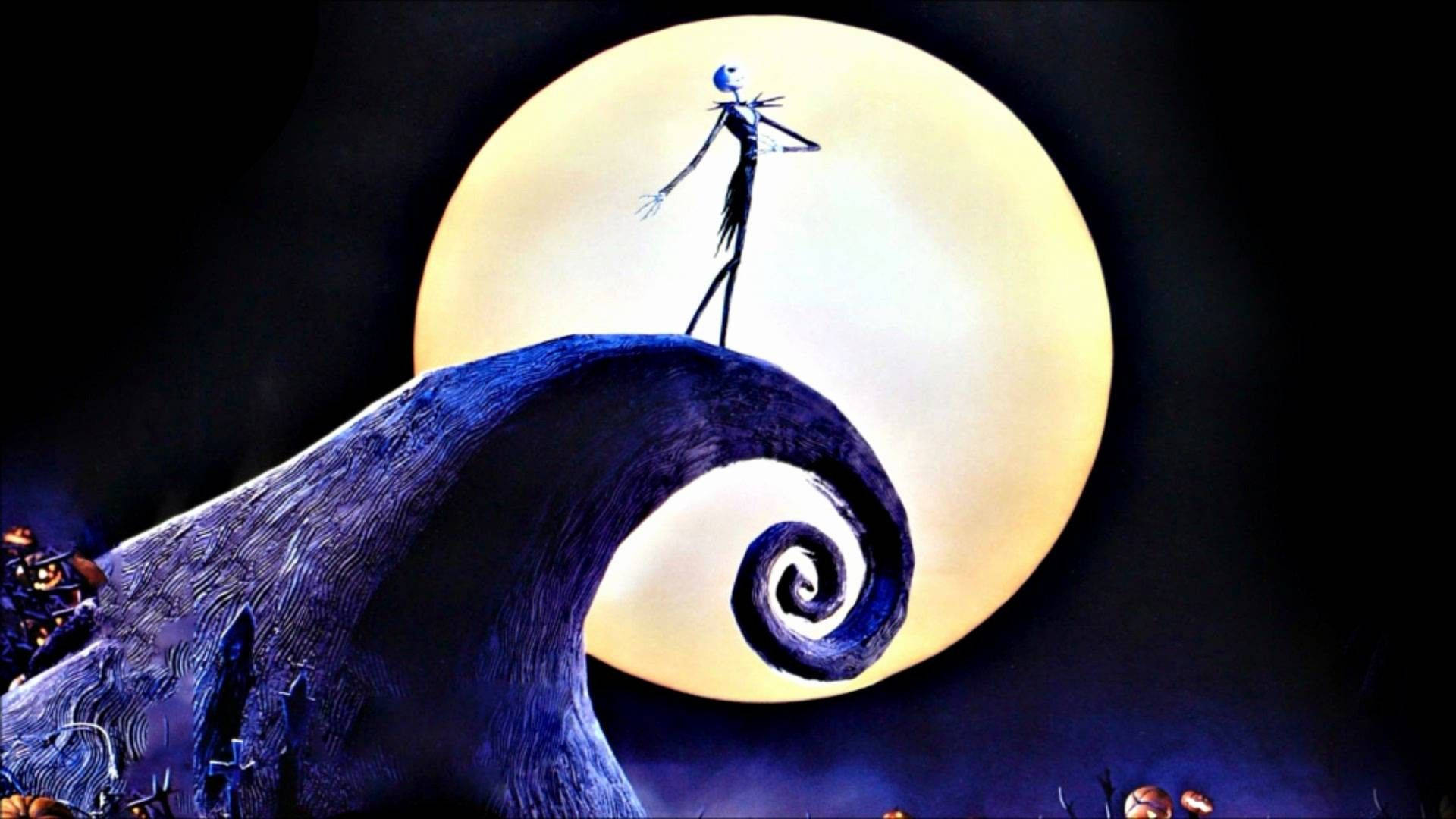
To say “I am Jack, the Pumpkin King” after the fall is not repetition. It is recovery. The words are the same, but they mean something different because the speaker has changed. At the beginning of the movie, the title had gone stale into a mask; after his fall (from grace, maybe? though from the sled, more literally), it becomes a conscious office. He returns to Halloween not because the wider world beat him, but because he has rediscovered his proper relation to that world and to himself. He can love Christmas now without needing to become Christmas. That is maturity: not the death of wonder but the purification of wonder from possession.
Sally’s arc completes the same figure from the opposite side. Jack has to give up a false expansion; Sally has to escape a false enclosure. He is tempted to become what he is not; she is pressured to stay less than she is. His ordeal is glamour. Hers is captivity. Both are violations of Will. So their meeting on the spiral hill is not only romantic closure. It is two beings who have each moved toward the truth, standing in a landscape that belongs to Halloween Town but is softened by snow, touched by the other world without being conquered by it. Christmas has not replaced Halloween. It has blessed it from a distance. The snow falling on Halloween Town is not conversion. It is contact without theft.
The Holy Work of Staying Strange
The final wisdom of The Nightmare Before Christmas is not “be yourself,” at least not in the thin inspirational sense that has been worn smooth by repetition. Usually that phrase means: keep your preferences, flaunt your quirks, refuse all criticism, or call every impulse authentic. The film is after something harder. It says: become true enough that you no longer need to steal another life.
Jack begins as a master who has lost contact with the mystery of his own mastery. Sally begins as a made thing whose maker denies her freedom. Finkelstein creates without reverence. Oogie indulges without a center. Lock, Shock, and Barrel transgress without discipline. Santa, in his limited and necessary way, carries his own current and restores the balance Jack broke.
And no one in the film has to become normal. That is the crucial thing. Jack stays skeletal. Sally stays stitched. The monsters stay monstrous. Halloween Town stays Halloween Town. The point was never to sand the strangeness down until Christmas could approve of it. The point was to return each thing to the truth of its own nature.
Thelema, at its best, understands this. It is not a spirituality of bland affirmation. It does not tell you every desire is sacred because it happens to be yours, or that every fascination is a calling, or that every door which opens has your name carved on the throne inside.
Thelema says there is a law of your being. Find that. Be that. Not the role that wins applause, not the costume that dazzles you, not the borrowed ritual that makes you feel briefly alive.
Jack’s mistake is beautiful because it begins in wonder. Sally’s wisdom is beautiful because it survives captivity. Oogie’s evil is ugly because it is appetite pretending to be freedom. Finkelstein’s failure is tragicomic because he can give life and cannot recognize liberty. And Halloween Town, blessedly, is not cured. It doesn’t need to be.
At the end, the work simply continues. The monsters go back to their crafts. The Pumpkin King returns to his throne, but not as before. Sally stands beside him, not as a possession, not as a nursemaid, not as a manufactured companion, but as the one who knew the truth before anyone else could bear to hear it.
The snow falls. The cemetery glows. The skeleton and the stitched woman sing.
They are still strange. Only now, they are accurate.
Cite this
Johnathon Victor Reese. “This Is Not My Door.” Mere Thelema, October 30, 2026. https://www.merethelema.com/essays/this-is-not-my-door.
Preparing to share…
About the author