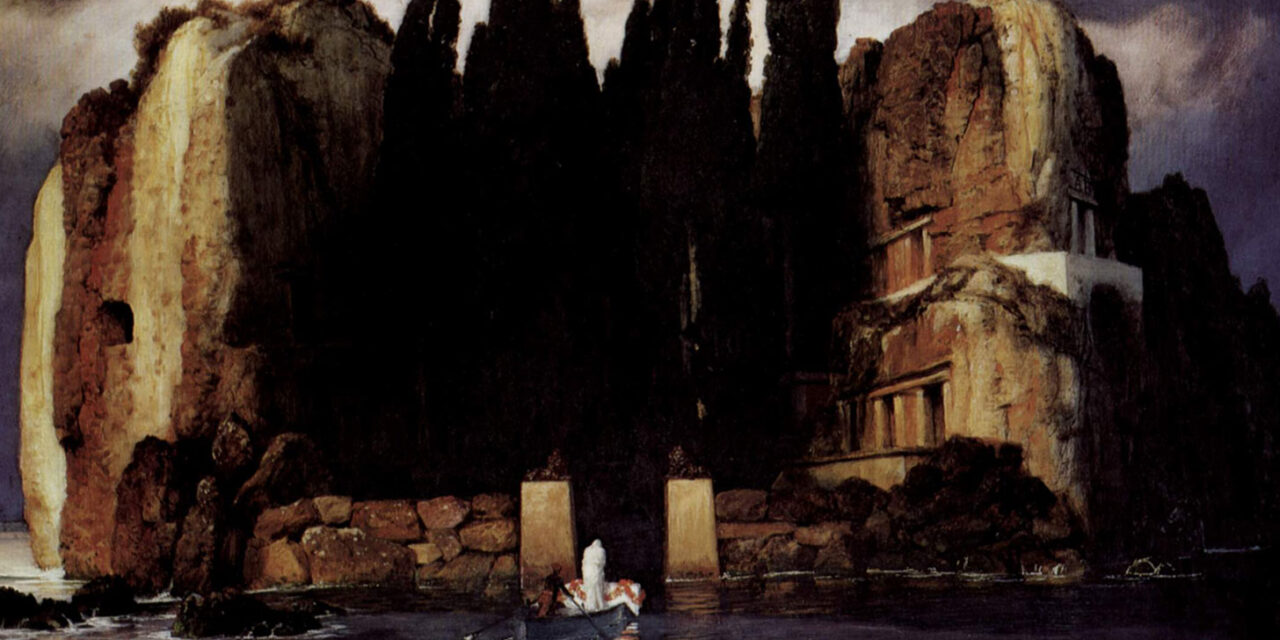
Note: The term death is used metaphorically. The Western Mystery Tradition has not ceased to exist. Rather, the term refers to its declining cultural influence, diminishing institutional vitality, and growing inability to attract and retain serious seekers in the broader social landscape.
Over the past several decades, Western society has seen many traditional institutions decline. Churches have closed, fraternal organizations have shrunk, and once-thriving philosophical and religious movements have struggled to stay relevant in a changing world. Similar declines have affected the Western Mystery Tradition, whose reduced vitality and cultural influence—and diminished ability to engage seekers—form the central question of this essay: Why have these traditions failed to seize opportunities created by mainstream religion’s decline? While much has been written about mainstream Christianity’s decline in North America, comparatively little attention has been given to the struggles of esoteric and initiatory traditions.
While the Western Mystery Tradition has often defined itself in opposition to conventional religion, it faces many of the same institutional problems as mainstream organizations. The same forces that weakened churches have similarly impacted occult organizations, initiatory orders, and alternative spiritual communities.
This essay examines this decline through historical observation and personal experience. I focus not on any one group, but on why many Western Mystery Tradition institutions failed to capitalize on the opportunities arising from the decline of traditional religious authority.
The Esoteric Revival
My interest in the occult began in the late 1970s during the Western esoteric revival. Books on ceremonial magic, Eastern spirituality, paganism, comparative religion, and alternative philosophies circulated widely. New religious movements emerged alongside renewed interest in older traditions. There was a widespread sense that established answers no longer sufficed and that alternative spiritual approaches deserved attention.
Unlike many contemporary seekers, I did not initially commit myself to any particular organization. Instead, I studied broadly and observed numerous religious and philosophical systems. I was fortunate to have a mentor whose guidance provided structure and context for my studies. This combination of independent inquiry and personal instruction allowed me to witness firsthand the remarkable diversity that characterized the esoteric landscape of the period.
The 1970s and 1980s were, by many measures, a period of growth for both religious and fraternal organizations. Established traditions attracted younger generations, while new movements emerged to address changing cultural needs. Interest in esotericism was not confined to any single social class, political orientation, or demographic group. Individuals from diverse backgrounds were united by a shared search for meaning beyond conventional religious frameworks.
Interest in Aleister Crowley and Thelema grew during this period. Curiosity about Crowley’s reputation as a cultural iconoclast often came before serious engagement with Thelemic philosophy. Some were drawn by his rebellious image; others genuinely sought the ideals behind his work.
This distinction had a lasting impact. Movements rooted mainly in founder charisma often struggle more than those grounded in coherent philosophy. The balance between fascination with Crowley as a figure and serious engagement with Thelema remains a persistent feature of modern Thelemic culture.
The Politicization of Religious Institutions
In the late twentieth century, important changes began to occur within American religious life. Political and religious identities became increasingly intertwined, particularly within conservative Christian communities. Churches shifted from spiritual institutions to vehicles for political mobilization and ideological reinforcement.
Organizations linked to the Religious Right gained influence. Political affiliation became a marker of religious identity. Debates over sexuality, gender roles, education, and cultural change took center stage in many churches, often overshadowing theology.
Prosperity theology turned parts of American Christianity into lucrative enterprises. Wealth was seen as divine favor, and institutional growth as spiritual legitimacy. Critics said this departed from traditional Christian values like humility, charity, and service.
Whatever one’s theology, these effects were clear. Many who once sought spiritual community became disillusioned by religion’s entanglement with politics and self-interest. Membership declined. Some churches consolidated committed members; others saw moderate and independent members leave.
At the time, I regarded these developments as primarily Christian problems. I believed that alternative spiritual movements, especially Thelema, were uniquely positioned to offer something different.
The Missed Opportunity
For years, I promoted Thelema. I served in a fraternal organization, participated in initiatory work, and worked to make Thelemic ideas more accessible.
Like many of my contemporaries, I believed we were witnessing a historic opportunity. As traditional religious institutions lost credibility, seekers naturally began seeking alternatives. The principles of individual sovereignty, personal responsibility, freedom of conscience, and self-discovery appeared uniquely suited to address the concerns of a modern and increasingly secular society.
Yet the anticipated renaissance never arrived.
Instead, many organizations made the same mistakes as mainstream religious institutions. Rather than prioritizing education, philosophy, or spiritual practice, they often focused on internal politics, personality conflicts, and self-preservation.
Some organizations prioritized expertise in historical personalities over communicating the ideas those individuals sought to express. Scholarly knowledge has undeniable value, but a founder’s knowledge is not synonymous with understanding a tradition.
More troubling was the gradual normalization of attitudes and behaviors at odds with stated ideals, including racism, misogyny, authoritarianism, and intolerance, so long as these did not create public relations issues or threaten organizational stability. Loyalty often overrode ethical consistency.
The parallels with the decline of mainstream churches became increasingly difficult to ignore.
Institutional Failure and Public Perception
When individuals invest years of effort, money, and emotional commitment in an organization only to discover that it falls short of its stated ideals, the consequences extend beyond simple disappointment. Most newcomers do not distinguish between an organization and the philosophy it claims to represent.
This distinction is crucial.
When members leave a church, they often abandon the faith itself. A similar pattern occurs in esoteric traditions: encountering hypocrisy or dysfunction, individuals assume such qualities are intrinsic to Thelema.
Whether that conclusion is fair is ultimately irrelevant. Public perception is shaped less by official doctrines than by the behavior of visible representatives.
Officers, teachers, and initiators serve as ambassadors of their traditions. Their behavior communicates more than official statements or publications. The success of a movement depends on whether its representatives embody its teachings.
Conclusion
The central tragedy facing much of the contemporary Western Mystery Tradition is not external opposition. Nor is it a decline in public interest in spirituality. Human beings continue to search for meaning, purpose, and transformative experience, just as they have always done.
The greater danger comes from institutional stagnation and the failure to embody the principles these traditions claim to uphold.
In many respects, the Western Mystery Tradition was presented with a historic opportunity. As confidence in traditional religious authority weakened, alternative spiritual movements gained unprecedented access to millions of individuals. We are once again presented with such an opportunity. The Catholic has sensed the opportunity to show the world how they walk their talk. Will we?